

I’ve been thinking lately about how many parts of ourselves we can tuck away without really meaning to.
Music has always been one of mine.
I’ve sung for most of my life. I’ve spent years singing harmony, more than a decade singing in a large church choir, performed with an orchestra behind me, and listened to music in that slightly obsessive way musicians sometimes do — hearing the harmonies, noticing the chord changes, listening for the part underneath the melody.
And yet, I haven’t talked about that part of myself very much.
I think that’s about to change.
Because lately music has been moving back toward the center of my life. I’m listening differently again. I’m thinking about arrangements. I’m hearing harmonies in my head. I’m writing songs of my own.
And all of that has had me remembering one of the most exciting musical experiences I’ve ever had.
The year my choir got to sing backup for Selah.
Wait. We’re Singing With Selah?
For years, I sang in a large church choir accompanied by a full orchestra.
And when I say we did Christmas, we did CHRISTMAS.
There was no casually pulling together a few carols sometime after Thanksgiving. Christmas music arrived when it was still hot outside.
July. August.
Nothing says Christmas quite like walking into rehearsal when it is approximately 95 degrees outside and opening a folder filled with holiday music.
But one particular year, our choir director had an announcement.
Our big Christmas program was going to be different.
Selah was coming.
And we were going to be their backup singers.
Oh my word.
We were thrilled.
I had listened to Selah for years. I loved their music and especially their harmonies. They had this beautiful way of taking a song and making it feel enormous without losing the heart of it.
And now we weren’t simply going to sit in an audience and listen to them.
We were going to sing with them.
There was only one tiny complication.
We had to learn an African song.
In Kituba.
None of us spoke Kituba.
Just Sing the Sounds
Todd Smith, one of Selah’s founding members, spent much of his childhood in Africa, where his parents served as missionaries. That experience became woven into Selah’s music, and the group has recorded songs using African musical traditions and the Kituba language.
This meant that somewhere in the middle of Kansas, a large American church choir suddenly found itself learning to sing in a language none of us understood.
And I mean NONE of us.
We learned it phonetically.
Listen.
Repeat.
Listen again.
Try not to completely butcher it.
Repeat again.
Eventually, the sounds started becoming familiar. Then the phrases. Then the music took over and somehow this collection of people who could not have carried on a thirty-second conversation in Kituba could sing an entire song in it.
There is something fascinating about that.
Years later, I heard Celine Dion talk about singing songs in English before she really understood the language, and I immediately understood how that could happen.
Sometimes as singers, we learn the music first.
The meaning comes later.
Music has this strange ability to carry something across a language barrier before our brains ever catch up.
But there was another part of preparing for that Selah concert that made the whole experience even more personal for me.
I found Istanbul.
And Suddenly, There Was Istanbul
By this point in my life, I had already lived in Turkey.
I had moved back to the United States, but anyone who knows me very well knows that leaving Istanbul and leaving Istanbul behind are two completely different things.
I had done the first.
I had definitely not done the second.
So as we prepared for the concert, I started looking around online at Selah’s music and videos.
And there it was.
Istanbul.
Selah had filmed a video there for their song BE — My Heart, My Hands, My Voice.
I couldn’t believe it.
Here was this musical group I had loved for years, this group I was about to get to sing with, walking through a city that had already become such an important part of my own story.
The video showed them interacting with people in Turkey as they shared the message behind the song. One moment that stayed with me was an older Turkish man becoming emotional during the conversation.
I knew those streets.
I knew those faces.
I knew something of the culture surrounding those conversations.
Suddenly this upcoming concert felt connected to two different parts of me at once.
Music.
And Turkey.
You can watch Selah’s Istanbul video for BE — My Heart, My Hands, My Voice here.
Then We Actually Got to Do It
After months of rehearsing, the concert finally arrived.
And there we were.
Selah in front of us.
Our choir behind them.
The orchestra playing.
And all of those hours spent learning notes, rhythms, harmonies — and yes, Kituba syllables we had repeated until they finally stayed in our heads — became a real performance.
There are musical moments you enjoy.
And then there are musical moments when some little part of you seems to stand outside yourself and think:
I cannot believe I get to do this.
That was one of those moments for me.
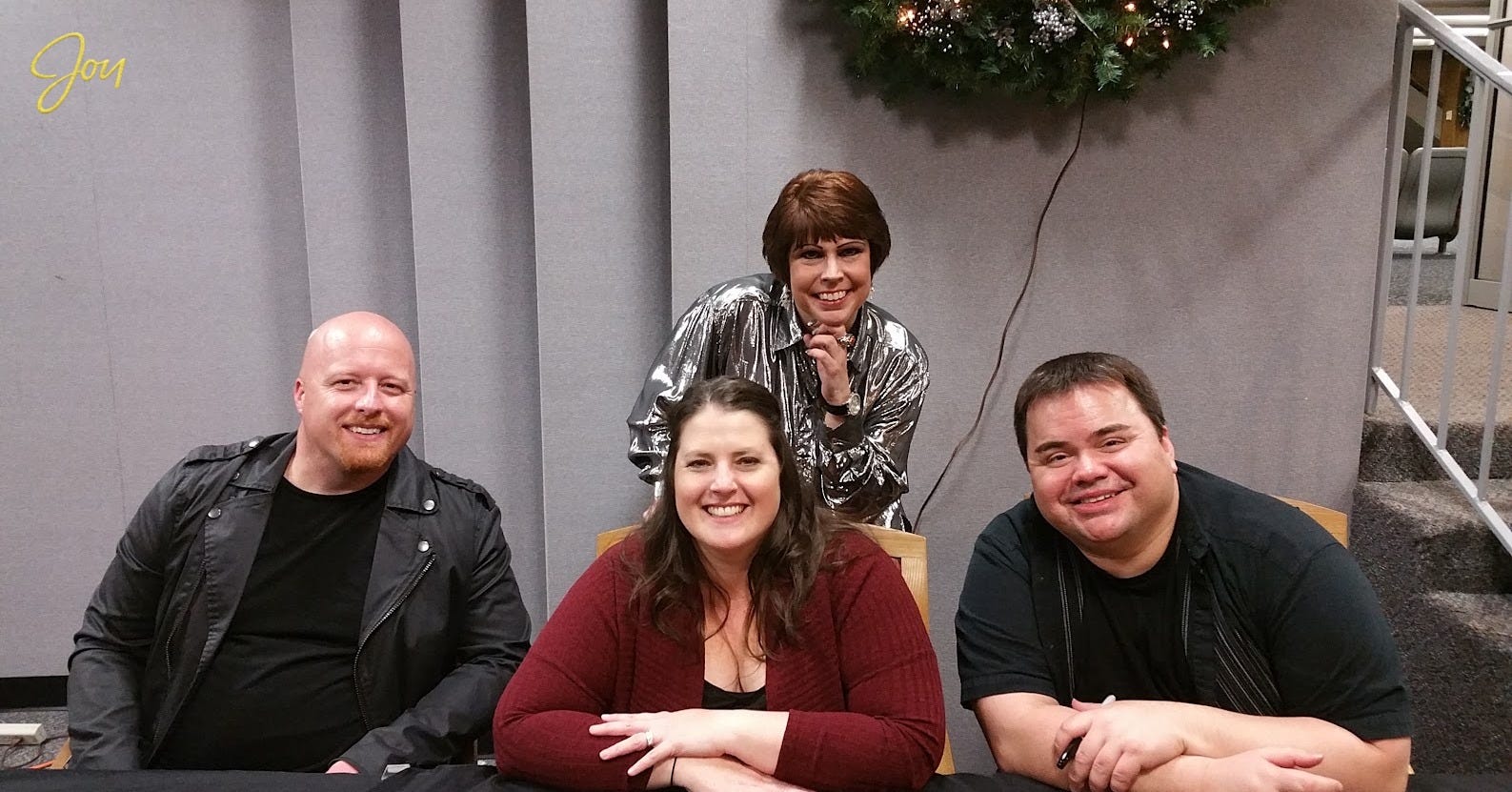
Todd Smith, Allan Hall, and Amy Perry were right there, and we were helping create the wall of sound behind songs I had already loved long before that evening.
Afterward, we had the opportunity to meet them.
I especially enjoyed talking with Allan Hall, Selah’s pianist and one of the group’s founding members. I told him about my connection to Istanbul and that I had actually been living there around the time they had filmed the video.
He was warm and gracious, and I loved having that brief opportunity to connect something that had meant so much to me with someone who had actually been part of creating it.
And then the concert was over.
Christmas came.
Life moved on.
But the music didn’t.
Maybe Music Never Went Anywhere
I’ve been thinking about that lately.
Because I could say that music is coming back into my life.
But I’m not sure that is true.
Maybe music never went anywhere.
I’ve been the harmony singer.
I’ve been the choir member with an orchestra swelling behind me.
I’ve been the woman who hears the chord change and immediately starts listening for where the other parts should go.
I’ve been the person rearranging harmonies in my head without even realizing that not everybody does that.
I’ve spent years loving beautiful voices, rich instrumentation, big arrangements, unexpected chord progressions and those musical moments that make something inside me soar.
And now I’m writing songs of my own.
Maybe I’m finally ready to stop treating music like a little side room in my life that I occasionally wander into.
It belongs in the main house.
So you’ll probably start hearing a little more about music from me.
The songs I’m listening to.
The artists who fascinate me.
The harmonies I can’t stop hearing.
The memories attached to certain songs and performances.
What happens inside my head when I’m building a song.
And, eventually, more of the music I’m creating myself.
Because apparently the woman who once spent months learning a song in Kituba so she could sing backup for Selah still has a few songs of her own left to sing.
Actually...
I think she’s just getting started.

Continue the Conversation
What's something you've always loved doing that people might be surprised to learn about you?
I’d love to hear your thoughts in the comments. Some of my favorite conversations begin there, and I read every one.
Continue the Journey
Paid subscribers receive Letters from Istanbul, my ongoing memoir series inspired by the years I spent living in Turkey.
If you’d like to wander the streets of Istanbul with me, meet unforgettable characters, and discover the joys, surprises, and lessons waiting around the next corner, I’d love to have you along.
Your subscription makes it possible for me to keep writing these stories and creating work that helps people find joy in unexpected places.
Until next time, may you find a little more joy in the ordinary.
— Deronda
The Joy Ambassador | Architect of Joy